

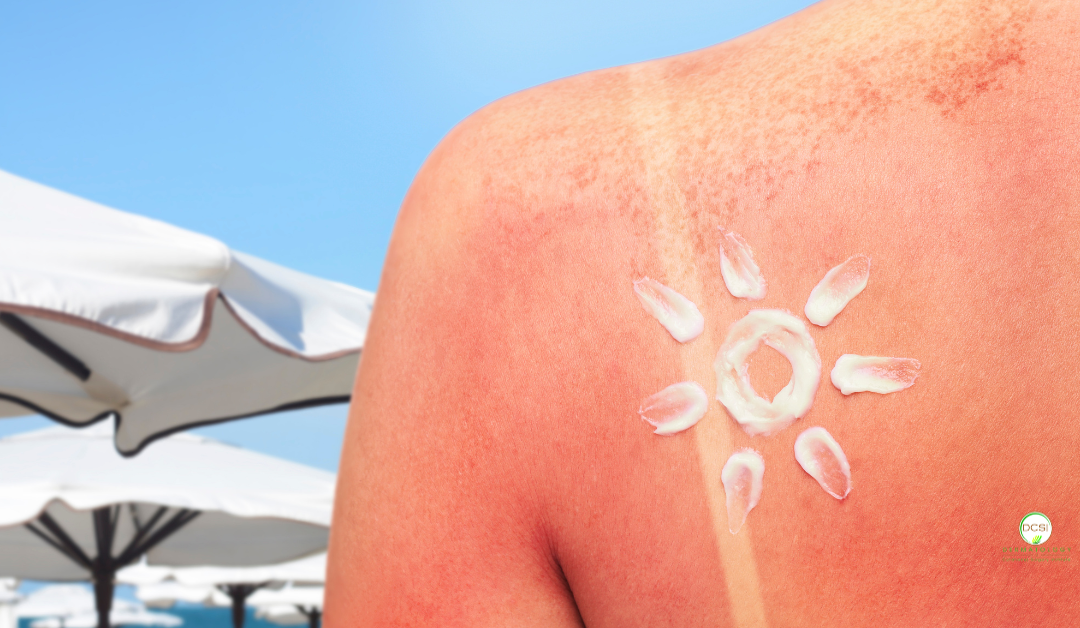
Living in South Florida means enjoying bright sunshine every day. Though the weather might be beautiful, it can harm your body over time. You need to know the early signs of sun-damaged skin to stay healthy while looking your best.
Unfortunately, many people wait until they see a problem before they seek help. However, the expert team at Dermatology & Cutaneous Surgery Institute (DCSI) is always here for you. Our local skin doctors in Wellington and Delray Beach know exactly how the hot Florida sun damages your skin. We take pride in protecting the families who live and work right here in Palm Beach County.
Why the South Florida Sun Ages Your Skin So Quickly
The bright sun in our area is incredibly strong, and sun damage in South Florida happens much faster than in other parts of the country. The sun sends out invisible energy called UV rays.¹ Some UV rays affect the surface of your skin, while others penetrate deeper and cause long-term damage.
Knowing the signs of sun-damaged skin helps you act quickly to stay safe and healthy. Catching these changes early prevents much larger health problems later in your life.
Common Signs of Sun-Damaged Skin
You might notice strange changes in the mirror after a long summer. For example, your face might feel rough or have an uneven skin texture. You might also see small dark spots from sun exposure on your nose or cheeks. Doctors call these flat brown freckles solar lentigines, though many individuals refer to them as liver spots. You can also have large patches of dark skin, called hyperpigmentation, that can make your face look very muddy.
If you see any of these signs of sun-damaged skin, our skin rejuvenation treatments can safely smooth your face. With our specialized tools, we can make your skin look bright and clear again.
The Science of Photoaging
The UV rays from both the sun and tanning booths can age your skin long before your time. Doctors use the word photoaging to describe this fast aging process.² Specifically, these UV rays ruin your skin's natural building blocks. The UV rays cause a breakdown of collagen and elastin deep under the surface.³ Collagen is the protein that helps your skin’s structural integrity, strength, and elasticity. Elastin is an elastic protein in connective tissue that allows the skin to stretch and recoil.
Repeated UV exposure over time can cause the skin to develop a leathery texture that feels tough and dry. Soon after, fine lines and deep wrinkles start to appear around your eyes and mouth. These signs of sun-damaged skin show that your body needs professional medical care.
Finding Dangerous Skin Spots
Some sun spots on your body can turn out to be quite dangerous. Over time, rough spots can turn into actinic keratoses. These are crusty bumps that feel like thick sandpaper, and a doctor must check them right away. It’s possible for these dangerous signs of sun-damaged skin to eventually turn into cancer.⁴
If you have a suspicious-looking spot, our skilled team can examine it quickly. When necessary, we use Mohs micrographic surgery to gently remove cancerous tissue. This specialized procedure is designed to preserve as much healthy skin as possible while minimizing scarring.
Fixing the Damage: How We Help Your Skin
Stopping sun damage before it starts is much easier than fixing it after the fact. For this reason, you should wear strong sunscreen every day to keep your skin safe.⁵ Sunscreen acts like a strong shield against the sun's invisible UV rays. If you are going to be outdoors for an extended period, wearing a wide-brim hat can help protect your face from direct UV exposure.
As a trusted Dermatologist in Delray Beach and Wellington, we always advise our patients to cover up when they go outside. You can read our easy tips to avoid skin cancer to learn more about skin health. We want to help every person in South Florida enjoy the sun without being harmed.
Book Your Skin Check Today
You should check your skin for new marks every month. Look closely for any spots that change color or bleed. Additionally, watch for bumps that are painful or itchy. These changes mean you need to see a dermatological professional right away.
If you need a great Delray Beach dermatologist, our skilled team is ready to help you. We also have a wonderful Wellington dermatology office for your convenience.
Finding a good doctor gives you total peace of mind about your health. Simply fill out an appointment request today for your complete skin exam.
Sources
- US Environmental Protection Agency. UV Index. EPA website. Accessed April 2026. https://www.epa.gov/sunsafety/uv-index-1
- Rittié L, Fisher GJ. UV-light-induced signal cascades and skin aging. Ageing Res Rev. 2002;1(4):705-720. Accessed April 2026. https://pmc.ncbi.nlm.nih.gov/articles/PMC4292080/
- Poon F, Kang S, Chien AL. Mechanisms and treatments of photoaging. In: Photodermatology. Springer; 2015:35-48. Accessed April 2026. https://www.ncbi.nlm.nih.gov/books/NBK537164/
- Centers for Disease Control and Prevention. What are the risk factors for skin cancer? CDC website. Accessed April 2026. https://www.cdc.gov/cancer/features/skin-cancer.html
- US Food and Drug Administration. Sunscreen: How to help protect your skin from the sun. FDA website. Accessed April 2026. https://www.fda.gov/drugs/understanding-over-counter-medicines/sunscreen-how-help-protect-your-skin-sun