

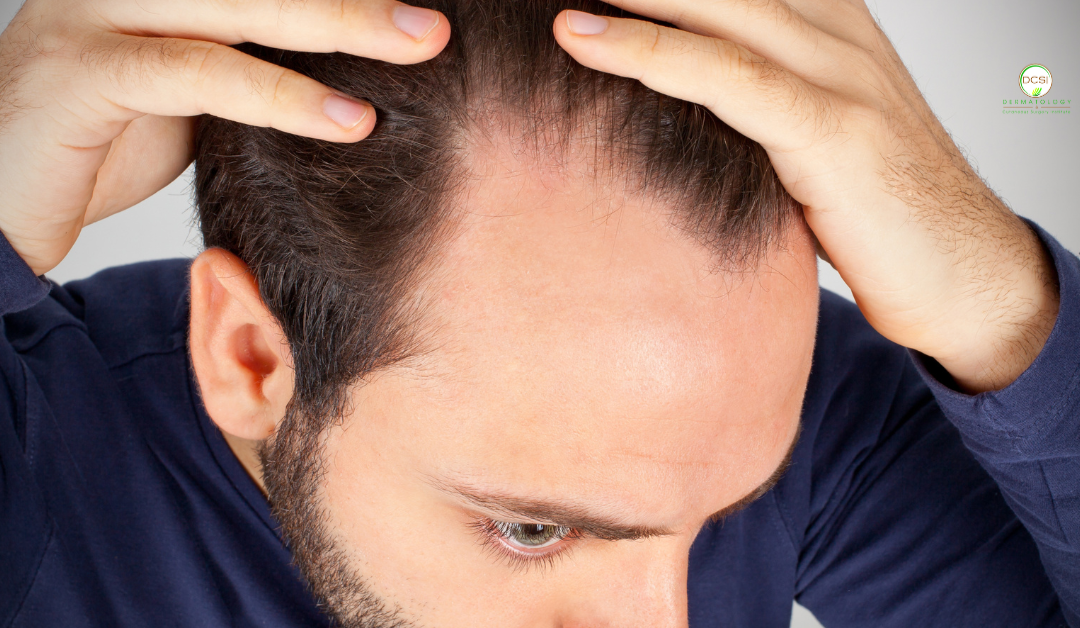
Spotting a male receding hairline for the first time can feel scary. Many guys spend hours looking in the mirror, wondering if real hair loss is starting. It's normal to feel worried if you start noticing changes. However, talking to a skin doctor early is the best way to save your hair. Getting help quickly lets you find fixes before your hair is gone for good.
Losing your hair can make you look or feel older than you really are. You might try to hide it with hats or a haircut. Sadly, hiding the problem doesn't stop your hair from falling out, but getting professional medical advice puts you back in control of your looks.
At the Dermatology & Cutaneous Surgery Institute (DCSI), Dr. Mounir M. Wassef and our caring team offer proven help. We strive to put our patients first. Our offices are in Wellington and Delray Beach, right in Palm Beach County. This makes it easy to get stellar skin and hair care locally. We know that hair loss hurts your confidence, but we want to change that by helping build a care plan just for you.
What Causes a Male Receding Hairline?
To address the problem of a receding hairline, it helps to understand why hair follicles miniaturize. Hair loss, medically known as androgenetic alopecia, often results from a combination of genetics and hormones. Specifically, dihydrotestosterone (DHT) binds to receptors in the scalp, causing the hair follicles to gradually shrink. As the follicles miniaturize, they produce thinner, weaker strands until they may cease hair production entirely. Finding an effective androgenetic alopecia treatment requires an accurate medical diagnosis, and over-the-counter remedies may not be sufficient. Clinical literature details how hormonal fluctuations disrupt the natural hair growth cycle. This understanding allows our team to identify a suitable medical approach for your condition. Elevated stress levels can also impact your hair by pushing follicles into a premature resting phase, leading to increased shedding. Managing daily stress supports overall bodily health and may help protect your natural hairline. Daily lifestyle choices can influence hair strength. Our clinic frequently discusses dieting for healthy hair and skin. Eating the proper healthy foods can give your body the building blocks it needs to build tough hair. For example, eating enough protein and vitamins can help keep each strand of hair on your head strong.Spotting the Signs: Hair Thinning vs. Receding Hairline
Knowing the early signs of a receding hairline helps you act fast. If you notice your hair thinning and you want to address it, you should start before the roots completely die. One symptom you might first notice is a change at your temples. This loss often makes an M shape on your forehead. You also might notice more hair on your pillow. Spotting these signs early gives you an advantage. Some people notice their hairline changing in their early twenties. Others might not see any changes until around the age of fifty. Every man follows a completely different timeline for hair loss. You should compare your hair today to old photos of yourself, as this will help you spot slow changes over time. It's vital to know exactly how you lose hair. A shrinking hairline in the front looks different from losing hair everywhere. There is a difference between hair thinning vs. receding hairline patterns. Some individuals deal with both issues at once. For example, you might see thinning of the crown while the front of your hair appears to move toward the back.² We track these male pattern baldness stages to find the right treatment for you. You can improve your hair health with simple, healthy scalp tips. A healthy scalp pumps more blood to the roots. Keeping your head clean creates a great space for hair to grow. Also, if you experience vitamin deficiency hair loss, changing your diet can help prevent your hairline from getting worse.How to Stop a Receding Hairline With Expert Care
Store shampoos rarely stop genetic hair shrinking. Fixing a male receding hairline needs a professional skin doctor's touch, as understanding how to stop a receding hairline takes true medical skills. First, we must look closely at your head. We always start with a deep hair treatment checkup to discover specifically what your scalp needs. This initial evaluation helps uncover underlying issues. For example, we may administer a hair infection treatment if you are experiencing conditions like folliculitis, which is a common skin condition where hair follicles become inflamed and is often due to bacterial or fungal infections, or severe scalp inflammation. Addressing these localized dermatological conditions is a necessary step before beginning a restoration regimen. Once a clear diagnosis is established, we can introduce targeted medical therapies. We also look at your daily shower routine during your visit. Using harsh soaps or shampoos can strip away natural oils from your scalp. Your roots need these natural oils, as they help your roots stay strong and flexible. We will suggest gentle products that protect your sensitive skin and scalp. Simple changes at home make a massive difference in your results.Prescription Treatments and Topicals
Patients often get great results using prescription treatments for hair loss. These therapies work in a few different ways. They either push more blood to the roots or block hormones that are causing hair loss.³ You can learn all about our medical plans on our hair loss treatment page. Ultimately, these treatments, which can include oral medications and topical creams, can help keep a male receding hairline from getting worse.Procedural and Lifestyle Solutions
In addition to topical therapies, procedural treatments can stimulate dormant follicles. Non-surgical hair restoration, such as platelet-rich plasma (PRP) therapy, can be highly viable for patients who address their hair loss early. This treatment utilizes the growth factors found in your own blood plasma to encourage follicular activity and support new hair growth. Environmental factors and lifestyle habits can also heavily influence your overall hair health. These treatments are fast and have little downtime. You can usually go right back to work after your visit. We want you to feel comfortable the entire time. Our team explains every step before we begin. We don’t want you to feel rushed or confused in our care. Many of our patients enjoy the beach, and they ask us, "Is saltwater good for your hair?" Keeping your head safe from the sun and salt helps your medical treatments work better. Taking care of your head outside matters just as much as clinic visits. Consistently protecting your scalp ensures that a male receding hairline doesn't speed up. Simply wearing a hat when you are out in the sun can make a huge difference.South Florida's Go-To Hair Experts
When you want your confidence back, local doctors often matter the most. If you need receding hairline treatment in Wellington, our team can build a plan just for you. Dr. Wassef is a male pattern baldness dermatologist that Delray Beach locals trust. We offer top-tier hair loss treatment that South Florida patients love for natural results. Your hair is in great hands with us. Picking an experienced dermatologist for hair loss in Wellington gets you the right answer on day one. You can find great hair restoration in Delray Beach right inside our modern clinic. Our team knows how to make your hair look its absolute best. We use the latest tools to track your progress, so you'll never feel left in the dark during your care.Book Your Hair Loss Visit Today
Time is important if your hair roots start shrinking. Catching a male receding hairline early gives you the best chance to reverse hair loss. Quick action can help stop additional hair from falling out, and it can initiate fresh growth. Take the first step to get your hair and pride back. Please contact Dr. Mounir M. Wassef and the DCSI team to book your visit today.Sources
- Ho CH, Sood T, Zito PM. Androgenetic Alopecia. StatPearls. Published August 2023. Accessed July 2026. https://www.ncbi.nlm.nih.gov/books/NBK430924/
- Cranwell P, Sinclair R. Male Androgenetic Alopecia. Endotext. Published February 2016. Accessed July 2026. https://www.ncbi.nlm.nih.gov/books/NBK278957/
- Henne SK, Nöthen MM, Heilmann-Heimbach S. Male-pattern hair loss: Comprehensive identification of the associated genes as a basis for understanding pathophysiology. Medizinische Genetik. Published May 2024. Accessed July 2026. https://pmc.ncbi.nlm.nih.gov/articles/PMC10842561/
- Gupta M, Mysore V. Classifications of Patterned Hair Loss: A Review. Journal of Cutaneous and Aesthetic Surgery. Published 2016. Accessed July 2026. https://pmc.ncbi.nlm.nih.gov/articles/PMC5596658/