
Skin longevity is a simple idea: helping your skin stay healthy, resilient, and comfortable for as many years as possible, not chasing a single quick fix. At Dermatology & Cutaneous Surgery Institute (DCSI), we talk with patients every week who want to know which habits and products are actually worth their time. The honest answer is that skin longevity comes down to a few well-supported basics, consistent sun protection, a gentle daily routine, and the right treatments for your skin, rather than any single miracle ingredient.
What Skin Longevity Really Means
As skin ages, several things happen at once. The outer layers become thinner and lose some of their fat, which makes skin look less plump and smooth.[1] Healing also slows down, so cuts, irritation, or breakouts can take longer to clear than they once did.[1] Underneath the surface, two proteins called collagen and elastin, which keep skin firm and stretchy, naturally break down over time, and that process speeds up with cumulative sun exposure.[2] Supporting skin longevity means slowing these changes where you can and working with a dermatologist on the ones you cannot prevent.
Solar radiation is the most important environmental factor leading to extrinsically aged skin, and cigarette smoking is also strongly associated with wrinkling, with wrinkling increasing the more a person has smoked over their lifetime.[1] That means the habits with the biggest impact on skin longevity are often the least glamorous: daily sunscreen, not smoking, and protecting your skin consistently rather than occasionally.
Collagen Production and Skin Cell Turnover
Collagen gives skin its structure, and collagen production naturally slows with age, which is part of why skin gradually loses firmness. Skin cell turnover, the process of shedding older surface cells and replacing them with new ones, also slows down over time, which can leave skin looking duller and rougher.
Prescription retinoids, like tretinoin, are one of the better-studied tools for addressing both of these changes directly. Tretinoin speeds up the renewal of surface skin cells and increases collagen production, which can improve skin tone and soften fine lines over time.[3] Retinol, the over-the-counter cousin of tretinoin, is milder and widely used to improve skin tone, pigmentation, and texture, though it is not studied in quite the same depth as its prescription counterparts.[3] If you are deciding between retinol vs tretinoin, a dermatologist can help you weigh how much strength your skin can tolerate against how quickly you want to see results.
For patients who want a more hands-on approach to supporting collagen, in-office options like microneedling and chemical peels work by encouraging the skin's own renewal process, which is part of why our cosmetic dermatology services often pair well with a solid at-home routine rather than replacing one.
Why Your Skin Barrier Matters for Skin Longevity
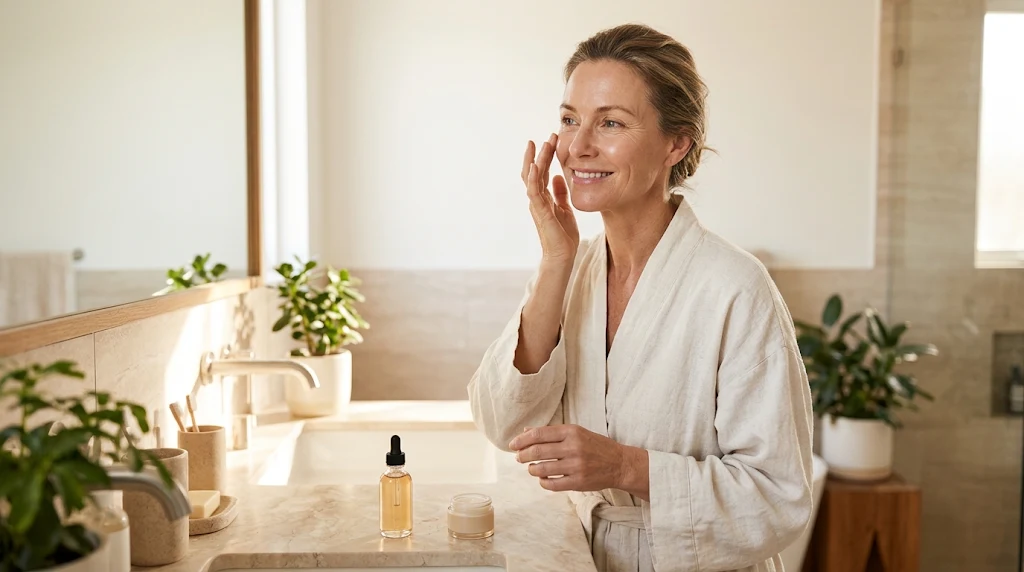
Your skin barrier, the outermost layer that keeps moisture in and irritants out, plays a bigger role in skin longevity than most people realize. A damaged skin barrier shows up as dryness, redness, or stinging, often after over-exfoliating or trying too many active ingredients at once. Moisturizer helps by trapping water in the skin, which can make it look more supple and youthful.[4] Many moisturizers also contain hyaluronic acid skin care ingredients, which are popular because they help the skin hold onto moisture, supporting a stronger, more comfortable barrier over time.
Diet plays a supporting role too. A balanced diet rich in fresh fruits and vegetables may help guard against some of the damage behind premature skin aging, while diets high in sugar and refined carbohydrates have been linked to faster aging in a few studies.[4] Limiting alcohol, which can dehydrate skin over time, and washing gently instead of scrubbing round out a simple, barrier-friendly routine.[4]
Building a Skin Longevity Routine That Lasts
A dermatologist-guided approach to skin longevity usually starts simple: broad-spectrum sunscreen every day, a gentle cleanser, a barrier-supporting moisturizer, and a retinoid introduced gradually once your skin tolerates it. From there, in-office treatments can be layered in based on your goals, whether that means more even tone, smoother texture, or a collagen boost that home care alone typically cannot match.
Supporting skin longevity is not about doing everything at once. It is about choosing the habits and treatments your skin actually benefits from and giving them time to work. Our board-certified dermatologists at both the Wellington and Delray Beach offices can help patients throughout Palm Beach County and Boca Raton build a plan that fits their skin and their schedule. Schedule an appointment to talk through what skin longevity could look like for you.
Frequently Asked Questions
What does skin longevity actually mean?
Skin longevity refers to helping skin stay healthy, resilient, and comfortable over the long term, rather than chasing a short-term cosmetic change. It usually involves consistent sun protection, a barrier-friendly routine, and treatments matched to your skin's needs.
Can collagen supplements really improve skin longevity?
Yes, consuming collagen through food or supplements may help improve skin appearance, though more research is still needed to fully prove its benefits. A dermatologist can help you understand what the evidence shows for your specific goals, while in-office treatments and prescription options like retinoids offer more direct evidence for boosting collagen production.
What is the difference between retinol and tretinoin?
Retinol is an over-the-counter retinoid that gently improves skin tone and texture, while tretinoin is a prescription retinoid that more directly increases collagen production and skin cell turnover. A dermatologist can help you choose based on your skin's sensitivity and your goals.
How does my skin barrier affect how my skin ages?
A healthy skin barrier holds in moisture and keeps out irritants, which helps skin stay comfortable and resilient. When the barrier is damaged, from over-exfoliating or harsh products, skin can look drier, more irritated, and more prone to visible signs of aging.
Sources
- MedlinePlus. Skin aging. https://medlineplus.gov/skinaging.html. Accessed November 2026.
- National Institute on Aging. Skin care and aging. https://www.nia.nih.gov/health/skin-care/skin-care-and-aging. Accessed November 2026.
- American Academy of Dermatology. Retinoid or retinol? https://www.aad.org/public/everyday-care/skin-care-secrets/anti-aging/retinoid-retinol. Accessed November 2026.
- American Academy of Dermatology. 11 ways to reduce premature skin aging. https://www.aad.org/public/everyday-care/skin-care-secrets/anti-aging/reduce-premature-aging-skin. Accessed November 2026.