

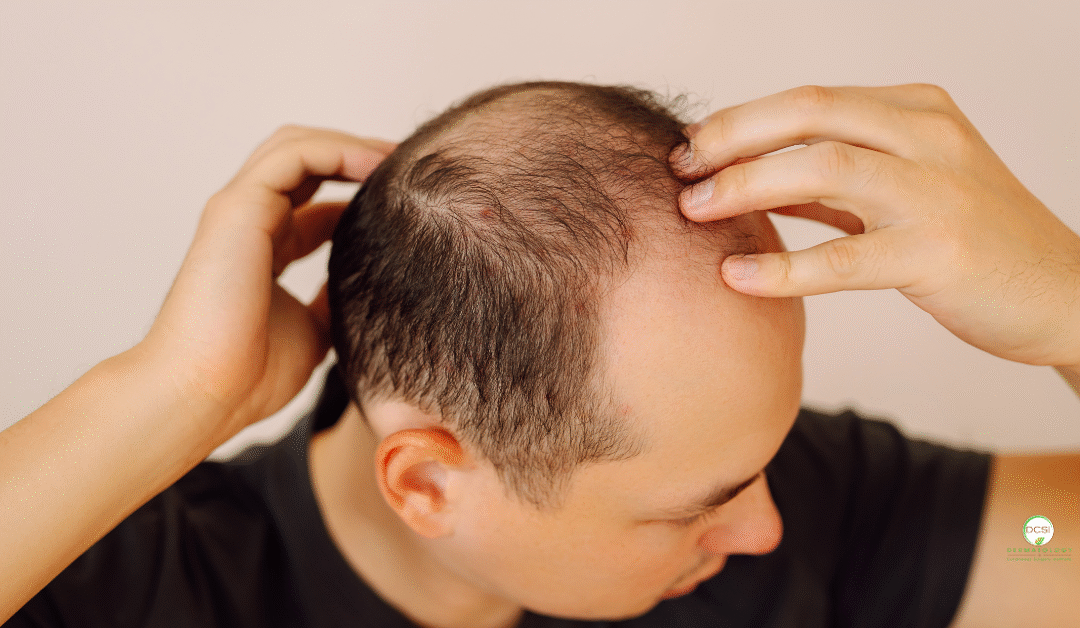
Noticing more hair in the shower or on your brush is alarming. Your first instinct is probably to search online for an answer, and vitamin deficiency is a common result. It's a stressful situation, and it's easy to wonder if vitamin deficiency hair loss is the culprit. This is one of the most common concerns we hear from our patients, and the short answer is: maybe, but it's rarely the full story.
While a nutritional deficiency absolutely can be a factor in hair thinning, it's often a single piece of a much larger, more complex puzzle. At the Dermatology & Cutaneous Surgery Institute (DCSI), our board-certified dermatologists serving Wellington and Delray Beach specialize in getting to the true root cause of hair loss. We believe in a "Stop Guessing, Start Diagnosing" approach. Before you spend time and money on over-the-counter supplements that may not work, let's explore what's really going on.
The Deficiencies That Actually Matter
When we analyze a patient's blood work, we are looking for specific, clinically relevant markers. Hair follicles are among the most metabolically active cells in the body, and their high cell turnover rate makes them sensitive to any nutritional imbalance.
The most common link we see in our practice is iron deficiency hair loss, especially in pre-menopausal women. Iron is essential for producing hemoglobin, the protein in your red blood cells that carries oxygen. When your iron stores (known as ferritin) are low, your body's survival mechanism is to shunt oxygen to vital organs, like your heart and brain, and away from "non-essential" functions like hair growth. This can force hair follicles into a resting state, leading to increased shedding.
Similarly, we often investigate the question, “Can low vitamin D cause hair loss?” Vitamin D, which functions more like a hormone, is critical for many bodily functions, including skin and follicle health. Vitamin D receptors are present in the hair follicles, and low levels of this vitamin are thought to disrupt the hair's growth cycle (the anagen phase).
We also check zinc for hair loss, as this mineral plays a vital role in hair tissue growth and repair. It is essential for protein synthesis and cell division, two processes required for healthy hair production.
Other deficiencies, such as low Vitamin B12 and folate, can also be culprits. These B vitamins are critical for creating healthy red blood cells, which, like iron, are necessary for oxygenating the scalp and follicles. In fact, a 2019 review on the role of nutrients in hair loss found that deficiencies in iron, vitamin D, and B12 are all potential contributors to hair shedding.¹ A low ferritin level, for example, is a key marker we check when diagnosing a potential vitamin deficiency hair loss case.
The Biotin Myth: Why More Isn't Always Better
What about the supplement everyone talks about? While countless products are heavily marketed for biotin for hair loss, a true biotin (Vitamin B7) deficiency is extremely rare. For the vast majority of people, taking extra biotin will not stop hair loss because a deficiency simply isn't the cause.
The National Institutes of Health (NIH) confirms that biotin deficiency is rare in the United States.³ This is for two main reasons: it is present in a wide variety of common foods, and the "good" bacteria in your gut actually produce biotin for your body. A true deficiency is usually linked to specific genetic disorders, long-term use of certain anti-seizure medications, or chronic alcoholism.³
This is a perfect example of why a professional diagnosis is key to an effective hair loss treatment plan. Without it, you are simply treating a guess.
Why Self-Diagnosis Fails: Other Common Causes of Hair Loss
The problem with "Googling" your symptoms is that the signs of vitamin deficiency hair loss, like increased shedding, a widening part, and thinner texture, are identical to the signs of many other, more common conditions. The American Academy of Dermatology (AAD) lists dozens of potential causes of hair loss.² This is why treating a suspected vitamin deficiency hair loss on your own often fails.
In our Palm Beach County clinics, we find the true cause is often one of the following:
First, androgenetic alopecia is the most common cause of hair loss in the world, affecting both men and women. Also known as male-pattern or female-pattern hair loss, this is a genetic condition related to hair follicle sensitivity to a hormone called DHT. In women, it typically presents as overall thinning or a widening part, rather than the receding hairline common in men. This condition is progressive and will not respond to vitamins.
A second common diagnosis is telogen effluvium, which is a condition of excessive, temporary shedding, not permanent loss. It occurs after your body goes through a significant physical or emotional stressor, such as a major illness (like COVID-19), high fever, surgery, childbirth, or a period of intense personal stress. This shock pushes a large number of hairs prematurely into the resting (telogen) phase. About three months later, all of those resting hairs are shed at once. This is one case where a nutritional deficiency can be the trigger, so we check telogen effluvium vitamins to rule it out.
We also see alopecia areata, an autoimmune disease where the body's own immune system mistakenly attacks the hair follicles. It typically causes round, smooth, bald patches on the scalp, but can affect other areas. This condition requires a specific dermatological diagnosis and treatment to manage the inflammation.
Finally, we often trace hair loss back to underlying scalp conditions. Your hair cannot thrive in an unhealthy environment. Conditions that we treat as part of our medical dermatology services, such as severe seborrheic dermatitis (dandruff) or psoriasis, can cause intense inflammation and itching that leads to hair breakage and shedding.
Our Diagnostic Process: How We Find the Real Cause of Vitamin Deficiency Hair Loss
So, what doctor to see for hair loss? The clear answer is a dermatologist for hair loss. A dermatologist is the only specialist trained to diagnose the hundreds of types of hair loss by differentiating between these complex causes.
Your appointment at our Wellington or Delray Beach office begins with a comprehensive consultation. This is not a quick glance. We conduct a detailed review of your medical and family history, lifestyle, diet, medications, and stress levels.
Next, we perform a detailed physical examination of your hair and scalp. We often use a dermoscope, which is a powerful, non-invasive magnifying tool, to look at your follicles up close. This allows us to see signs of inflammation, follicle miniaturization (a key sign of genetic hair loss), or scalp disease that are invisible to the naked eye. We may also perform a gentle hair pull test to assess the severity of your shedding.
Based on these findings, we will order a targeted blood test for hair loss. This is where we get the definitive data. We don't order a generic panel. We specifically check your iron stores (ferritin), vitamin D, thyroid function, and other markers relevant to your specific symptoms and history.
Frequently Asked Questions About Hair Loss
What vitamin deficiency causes hair loss?
Several vitamin and mineral deficiencies can contribute to hair loss. The most common deficiencies linked to hair shedding include low iron (ferritin), low Vitamin D, and low Vitamin B12. Zinc is also essential for hair follicle health. A board-certified dermatologist can run targeted blood tests to determine if a deficiency is the true cause of your hair loss.
Is taking biotin good for hair loss?
For the vast majority of people, taking extra biotin will not stop hair loss. True biotin deficiency is extremely rare, as it is found in many common foods and is also produced by your gut. Hair loss is usually caused by other factors, such as genetics or hormones, which biotin cannot treat.
What blood tests does a dermatologist do for hair loss?
A dermatologist will order a targeted blood panel based on your specific symptoms and medical history. This test typically checks for common deficiencies linked to hair loss, including your iron stores (ferritin), Vitamin D, and Vitamin B12. They will also often check your thyroid function (TSH) and other markers to get a complete picture of your health.
What is the best treatment for hair loss?
The 'best' treatment depends on the cause of your hair loss. For genetic hair loss (androgenetic alopecia), treatments may include topical minoxidil or oral medications. For hair loss caused by inflammation, a dermatologist may use corticosteroid injections. For stimulating follicle growth, advanced treatments like PRP (Platelet-Rich Plasma) are often used. A proper diagnosis from a board-certified dermatologist is the only way to determine the best treatment for you.
Building Your Personalized Hair Loss Treatment Plan
Once we have a complete hair loss diagnosis, combining your history, your physical exam, and your lab results, we can build a treatment plan that actually works.
If your labs do show a deficiency, our first step is to create a proper, medical-grade supplementation plan. This is far more effective than grabbing a bottle from the grocery store. From there, we can finally determine how to stop hair loss from vitamin deficiency and monitor your progress.
More often, the diagnosis points to other factors, or a combination of factors. This is where a multi-faceted approach becomes essential.
A Multi-Faceted Approach to Treatment
Your personalized plan may include medical-grade topicals, such as prescription-strength minoxidil, which can be more effective than over-the-counter versions. We might also discuss targeted oral medications. For genetic hair loss, we can discuss FDA-approved medications like finasteride (for men) or spironolactone (for women) to address the underlying hormonal mechanism.
Additionally, we offer advanced, non-surgical treatments like platelet-rich plasma hair treatment (PRP for hair loss). This procedure uses your own body's concentrated growth factors, derived from a simple blood draw, which are then injected into the scalp to help stimulate dormant follicles and support hair regrowth.
Stop wondering if you are experiencing vitamin deficiency hair loss or if something else is the culprit. The only way to get a real solution and prevent further thinning is to get a real diagnosis. If you are concerned about hair loss, let our board-certified dermatologists in Palm Beach County find the true cause.
Call our Wellington or Delray Beach offices today to schedule your comprehensive hair loss consultation.
Sources
- Almohanna HM, Azhar A, Tsatalis JP, Tosti A. The Role of Vitamins and Minerals in Hair Loss: A Review. Dermatol Ther (Heidelb). 2019;9(1):51-70.
- American Academy of Dermatology Association. Hair Loss: Who Gets and Causes. Published 2024. Accessed November 2025.
- National Institutes of Health Office of Dietary Supplements. Biotin: Fact Sheet for Health Professionals. Published 2022. Accessed November 2025.