
Choosing between exosomes vs. PRP can feel confusing when both treatments promise fuller hair and firmer, more radiant skin. These two regenerative options work in different ways, and knowing those differences can help you set realistic expectations before you book a consultation. This guide breaks down how each treatment works, what current research shows, and which patients tend to benefit most.
At Dermatology & Cutaneous Surgery Institute (DCSI), Dr. Mounir M. Wassef and our team evaluate each patient individually before recommending a regenerative treatment plan. We see patients at our Wellington and Delray Beach offices who want science-backed options for thinning hair, dull skin, or early signs of aging, and we believe an informed patient makes the best decisions about their own care.
What Is Platelet-Rich Plasma (PRP) Therapy?
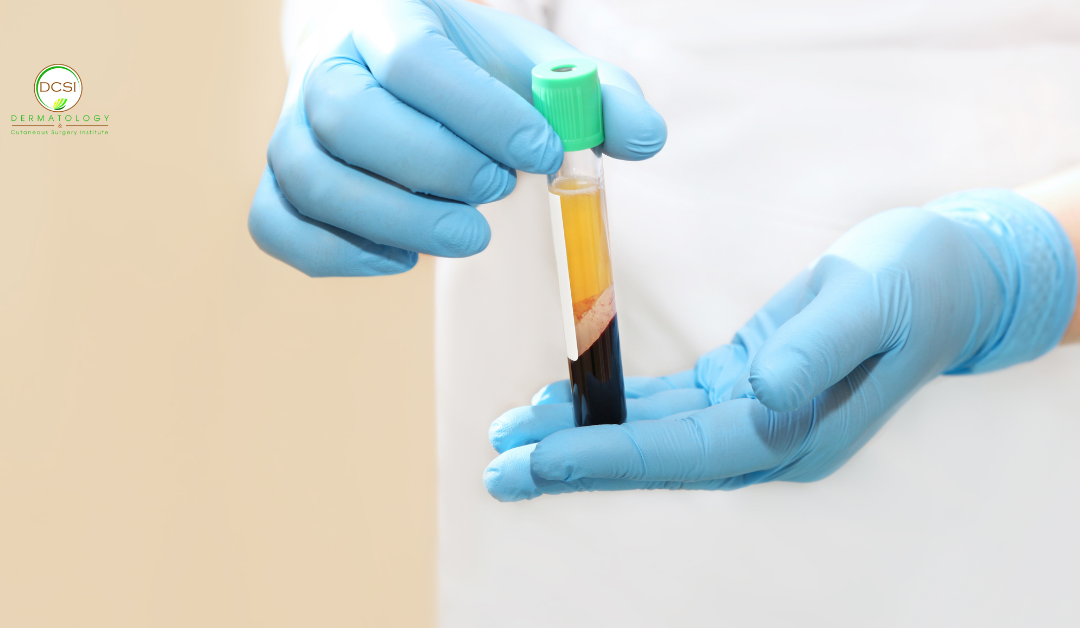
Platelet-rich plasma treatment starts with a simple blood draw, similar to routine lab work. A machine called a centrifuge then spins the blood to separate and concentrate the platelets, which carry growth factors that support tissue repair. Your provider draws blood, separates it, and injects the plasma portion into the scalp or skin. [1] The entire PRP for hair loss process usually takes about ten minutes, while PRP for facial rejuvenation can take 45 minutes to an hour. Both require little to no downtime. [1]
Because PRP uses your own blood, the treatment carries a well-established safety record and does not rely on any donor or lab-grown material. Most patients need a series of monthly sessions at first. When used for hair loss, this is often followed by maintenance visits every three to six months to help sustain results. [1]
What Are Exosomes, and How Do They Work?
Exosomes are nanosized extracellular vesicles, tiny packages released by cells that carry proteins, lipids, and genetic material from one cell to another. [2] Think of them as chemical messengers that help cells communicate, repair tissue, and regulate inflammation. Unlike PRP, most exosome products used in aesthetic treatments are not made from your own blood. They are typically derived from other biological sources, which is an important distinction for patients to understand before treatment.
Early research suggests exosomes may help reorganize skin structure, calm inflammation, and encourage collagen production. [2] That said, this remains a newer, less-regulated corner of regenerative skin treatment, and the science is still catching up to the marketing.
Exosomes vs. PRP: Comparing Mechanisms and Results
The core difference when weighing exosomes vs. PRP comes down to source and evidence. PRP uses your own concentrated platelets to trigger your body's natural healing response, and it has years of published research behind it. [1] Exosome therapy, by contrast, introduces lab-processed vesicles from an outside source, and a review from 2022 found no completed clinical trials specifically testing exosome therapy for hair loss, despite encouraging results in early laboratory studies. [3]
Both approaches aim to activate similar biological repair pathways, but PRP currently has more real-world data supporting its use, while exosome-based options are still building their evidence base. This does not mean exosomes cannot help, only that patients should go in with clear expectations about what has been proven so far.
PRP and Exosome Treatments for Hair Restoration
Androgenetic alopecia, commonly called pattern hair loss, affects an estimated 50 million men and 30 million women in the United States, and it becomes more common with age. [4] Men typically notice thinning at the temples and crown, while women tend to see gradual thinning along the part line. [4]
PRP hair restoration works by injecting concentrated growth factors directly into the scalp to help signal weakened hair follicles. When it comes to exosomes vs. PRP for pattern hair loss specifically, PRP remains one of the more established in-office options. It is often used in addition to topical minoxidil and prescription medications. Exosome therapy for hair loss is a newer alternative under active study, and while some clinics offer it, the clinical trial data confirming its effectiveness for alopecia is still limited. [3] Patients considering hair loss treatment options, including PRP hair restoration in Wellington, should discuss both the established and emerging choices with their dermatologist. If you are also managing flaking or irritation along the scalp, our scalp conditions page covers related concerns, and men noticing a receding hairline may find our guide to male pattern hair loss helpful background reading.
PRP and Exosome Treatments for Skin Rejuvenation
For facial rejuvenation, PRP facial treatment is often paired with microneedling, a procedure that creates tiny, controlled channels in the skin to stimulate collagen. PRP microneedling combines those micro-channels with your own platelet growth factors to potentially improve tone and texture. Microneedling with exosomes follows a similar approach but substitutes lab-processed vesicles for your own plasma.
A recent review of exosome therapy for skin found short-term improvements in hydration, elasticity, wrinkle depth, and overall appearance across a small number of human studies, with one trial showing topical exosome treatment performed comparably to PRP after microneedling. [2] However, most of these studies were small and not randomized, so more rigorous research is still needed.2 Patients researching regenerative skin treatment in Palm Beach County, or PRP facial treatment in Boca Raton, can learn more about our approach on the cosmetic dermatology and facial treatment pages.
Safety, Regulation, and What to Ask Your Dermatologist
Regulation is one of the most important differences between these two treatments. There are currently no FDA-approved exosome products, and exosomes intended to treat a disease or condition are regulated as drugs and biological products under federal law. [5] The FDA has warned patients about serious adverse events linked to unregulated exosome clinics, some of which make unsubstantiated claims about preventing, treating, or curing conditions. [5] PRP, by comparison, uses a patient's own blood through an established medical procedure, which is generally considered to have a more predictable safety profile. Remember that no medical procedure is entirely without risk.
Before starting either treatment, ask your provider where the product comes from, what its FDA regulatory status is, and what results similar patients have seen. Weighing exosomes vs. PRP often comes down to how much regulatory certainty matters to you as a patient. If you are exploring exosome therapy in Delray Beach or anywhere else, a board-certified dermatologist can help you separate evidence-based care from marketing claims.
Which Treatment Is Right for You?
If you want an option with a longer track record of published research, PRP is likely the more predictable starting point for hair restoration or facial rejuvenation. If you are curious about newer regenerative science and want to discuss the current evidence with a specialist, exosome therapy may be worth a conversation. However, it should come with realistic expectations about the research that still needs to be done. Ultimately, the right choice between exosomes vs. PRP depends on your goals, your medical history, and your comfort with each treatment's current evidence base.
As a hair restoration dermatologist serving South Florida, Dr. Wassef and the DCSI team are ready to walk you through your options. New patients are welcome at both our Wellington and Delray Beach locations. To find out which treatment fits your goals, schedule an appointment or contact Dr. Mounir M. Wassef and the DCSI team today.
Frequently Asked Questions
Is PRP or exosome therapy better for hair loss?
Both aim to stimulate hair follicles, but PRP has more published research behind it. Exosome therapy for hair loss shows promising early results, though large clinical trials are still lacking. Your dermatologist can help you weigh the evidence based on your specific hair loss pattern.
How long do PRP or exosome treatment results last?
Treatment schedules vary by treatment and goal. For PRP hair loss, patients often begin with monthly sessions followed by maintenance every three to six months. Your provider can recommend an appropriate schedule for facial PRP or exosome treatments based on your treatment plan.
Are exosome treatments safe and FDA-approved?
There are currently no FDA-approved exosome products. The FDA has warned about serious adverse events linked to unregulated exosome clinics, so it is important to ask your provider about the product's sourcing and regulatory status before treatment.
Can PRP and exosome therapy be combined for better results?
Some providers pair PRP with microneedling or topical exosome application to potentially enhance results, though more randomized research is needed to confirm added benefit. Discuss combination options with a board-certified dermatologist.
Sources
- American Academy of Dermatology. Hair loss: diagnosis and treatment. https://www.aad.org/public/diseases/hair-loss/treatment/diagnosis-treat. Accessed September 2026.
- Flores Rodríguez JC, Toledo Avelar LE, Yi K. Efficacy of Exosome-Based Therapies for Skin Rejuvenation: A Systematic Review of Human Studies. Cureus. 2026;18(2):e104182. https://pmc.ncbi.nlm.nih.gov/articles/PMC12933354/. Accessed September 2026.
- Kost Y, Muskat A, Mhaimeed N, Nazarian RS, Kobets K. Exosome therapy in hair regeneration: A literature review of the evidence, challenges, and future opportunities. Journal of Cosmetic Dermatology. 2022;21(8):3226-3231. https://pubmed.ncbi.nlm.nih.gov/35441799/. Accessed September 2026.
- MedlinePlus, National Library of Medicine. Androgenetic alopecia. https://medlineplus.gov/genetics/condition/androgenetic-alopecia/. Accessed September 2026.
- U.S. Food and Drug Administration. Public safety notification on exosome products. https://www.fda.gov/vaccines-blood-biologics/safety-availability-biologics/public-safety-notification-exosome-products. Accessed September 2026.