

Florida sunshine feels wonderful, but it comes at a cost to your skin. Learning how to avoid skin cancer starts with understanding why Palm Beach County and Florida residents face a higher risk than most of the country. Near-daily UV exposure adds up year after year, and it can damage skin cells long before a mole or spot ever appears.[1]
At Dermatology & Cutaneous Surgery Institute (DCSI), Dr. Mounir M. Wassef and our team help patients protect their skin and catch problems early. We see patients from across the region at our Wellington and Delray Beach offices, and prevention is one of the most common topics that comes up during appointments.
Building a Daily Sun Protection Routine
These skin cancer prevention tips start with the basics of a daily sun care routine. The Centers for Disease Control and Prevention recommends a broad-spectrum sunscreen with an SPF of 15 or higher, reapplied every two hours when you are outdoors.1 In South Florida, where the UV index often stays high even on cloudy days, sunscreen alone is not enough.
Wide-brimmed hats, UPF-rated clothing, and sunglasses that block UVA and UVB rays add another layer of protection.[1] Seeking shade between 10 a.m. and 4 p.m., when the sun is strongest, also cuts your daily exposure. If you already have cumulative sun damage from years in the Florida heat, our guide on sun-damaged skin covers how to care for affected skin and when to see a dermatologist.
How to Avoid Skin Cancer with Daily Habits
Small daily habits make a bigger difference than most people expect. Reapplying broad-spectrum sunscreen to your ears, the back of your neck, and the tops of your feet closes gaps that many people miss. These areas burn easily and are frequently overlooked.
Checking the UV index before you head outside, keeping sunscreen within reach, and choosing shaded parking when you can are simple, low-effort ways to avoid skin cancer without overhauling your routine. Patients who work outdoors or spend weekends on the water in Wellington or Delray Beach benefit most from building these habits early. Our medical dermatology team can help you build a sun care plan suited to your skin type and daily routine.
Spotting the Warning Signs: The ABCDE Rule for Melanoma
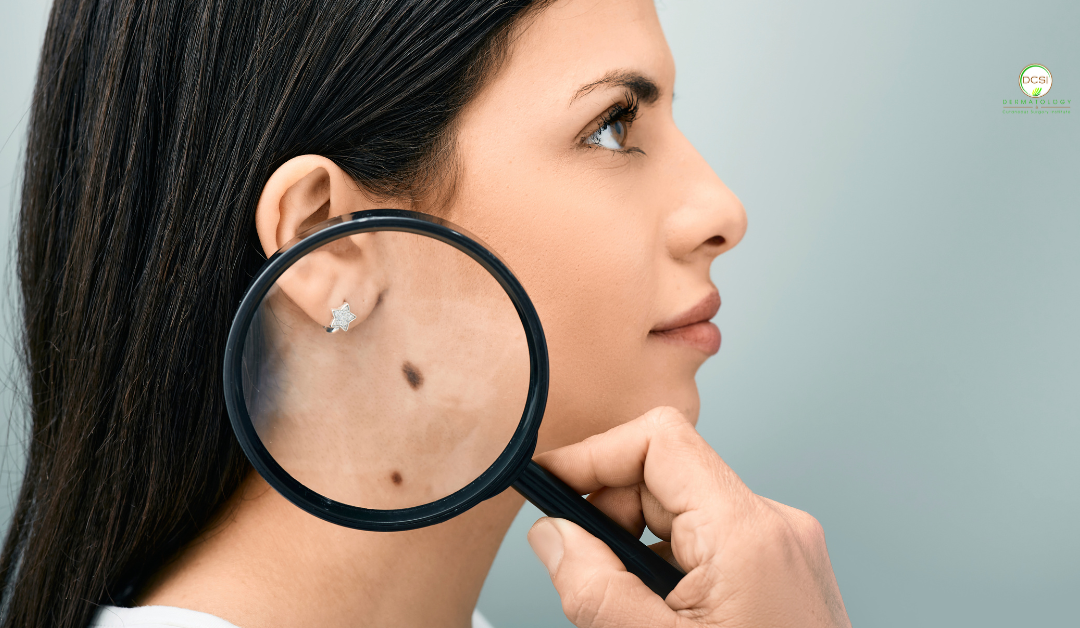
Daily prevention matters, but early detection can save lives. Melanoma, the most serious form of skin cancer, often starts as a change in an existing mole or a new spot on the skin.[2] Knowing the melanoma warning signs early can make treatment simpler and less invasive. Dermatologists use the ABCDE rule to describe the signs of skin cancer patients should watch for: asymmetry, an irregular border, uneven color, a diameter larger than a pencil eraser, and a spot that is evolving in size, shape, or color.[2,4]
A monthly self-skin exam in a well-lit room, using a mirror to check hard-to-see areas like your back and scalp, helps you catch changes early. Basal cell and squamous cell carcinomas can look different from melanoma, often appearing as a shiny bump, a scaly patch, or a sore that will not heal.2 If you notice sun damage that concerns you, our page on sun-damaged skin explains what to look for between visits.
Why Annual Skin Cancer Screenings Matter
Self-exams help, but they do not replace a professional skin cancer screening. Fair skin, a history of blistering sunburns, multiple moles, and a family history of the disease are all skin cancer risk factors that raise your personal odds.[3] A dermatologist in Palm Beach County can examine areas you cannot easily see yourself and spot changes long before they become obvious.
We recommend an annual skin exam for most adults, and more frequent visits for patients with a personal or family history of skin cancer. Our skin cancer screening service walks you through what to expect at your first appointment, and our guide on preparing for your first full body skin exam can help ease any nerves before your visit. This holds whether you request a skin cancer screening in Wellington, FL, or a skin cancer screening in Delray Beach.
Advanced Treatment When Skin Cancer Is Found
When a screening turns up a suspicious spot, early treatment gives you the best outcome. Dr. Wassef performs Mohs micrographic surgery, a precise technique that removes cancerous tissue layer by layer while preserving as much healthy skin as possible.[3] Patients across Wellington and Delray Beach trust this approach for skin cancers on the face, ears, and other cosmetically sensitive areas.
Our team also coordinates with your primary care physician when a skin finding may point to a broader health concern, so your care stays connected across providers. Learn more about our approach to Mohs surgery and what recovery typically involves.
Schedule Your Skin Cancer Screening With DCSI
Taking charge of your skin health is one of the most effective steps you can take for your long-term well-being. By combining everyday sun protection with routine self-exams and annual professional screenings, you protect your skin while ensuring any early changes are detected promptly.
Our experienced team at DCSI provides personalized care and comprehensive skin checks across Palm Beach County. To learn more about protecting your skin, explore our Skin Cancer Awareness guide. When you are ready to take the next step, schedule an appointment at our Wellington or Delray Beach location to prioritize your skin health today.
Sources
- Centers for Disease Control and Prevention. Reducing Risk for Skin Cancer. https://www.cdc.gov/skin-cancer/prevention/index.html. Accessed September 2026.
- Centers for Disease Control and Prevention. Symptoms of Skin Cancer. https://www.cdc.gov/skin-cancer/symptoms/index.html. Accessed September 2026.
- National Cancer Institute. Skin Cancer Prevention (PDQ) - Patient Version. https://www.cancer.gov/types/skin/patient/skin-prevention-pdq. Accessed September 2026.
- MedlinePlus. Skin Cancer. https://medlineplus.gov/skincancer.html. Accessed September 2026.